-
Your shopping cart is empty!

MENU
Your shopping cart is empty!
 New
-62%
New
-62%
 -63%
-63%
 -59%
-59%
 -63%
-63%
 -61%
-61%
 -61%
-61%
 -60%
-60%
 -62%
-62%
 -62%
-62%
 -60%
-60%
 -63%
-63%
 -59%
-59%
 -59%
-59%
 -64%
-64%
 -59%
-59%
 -64%
-64%
 -64%
-64%
 -61%
-61%
 -64%
-64%
 -62%
-62%
 -61%
-61%
 -62%
-62%
 -64%
-64%
 -62%
-62%
 -62%
-62%
 -64%
-64%
 -62%
-62%
 -62%
-62%
 -62%
-62%
 -61%
-61%
 -61%
-61%
 -62%
-62%
 -59%
-59%
 -61%
-61%
 -62%
-62%
 -64%
-64%
 -61%
-61%
 -62%
-62%
 -62%
-62%
 -61%
-61%
 -59%
-59%
 -64%
-64%
 -62%
-62%
 -61%
-61%
Sneaker culture in Australia has shifted dramatically over the past decade. Once the domain of basketball courts and school PE lessons, trainers have become a wardrobe staple from Fitzroy laneways to Bondi promenade. Walk down Chapel Street in Melbourne on a Saturday arvo and you will spot a mix of chunky dad runners, pristine court silhouettes, and the unmistakable distressed finish of Italian luxury pairs. The demand for premium kicks has grown so much that even suburban Chadstone queues now spill out of the sportswear retailers.
Yet the appeal goes well beyond aesthetics. Comfort, support and the right fit drive everyday buying decisions, especially for Australians juggling long commutes, beachside walks and weekend hikes. Picking between established giants like Nike and Adidas versus a fashion-forward label such as Golden Goose is rarely just about looks. Sizing behaves differently across each brand, and ordering online without trying a pair on first can feel like a gamble.
For shoppers in Sydney, Brisbane or Perth, the challenge is amplified by distance. There are far fewer physical outlets stocking Golden Goose than there are Nike or Adidas boutiques, which means most buyers place an order online and hope the size matches. The good news is that fit patterns are predictable once you know what to look for, and a bit of local know-how saves a lot of hassle.
This guide walks through how Golden Goose sneakers fit in comparison to two of the most familiar brands on the market. It covers width, length, materials, half-sizes, and practical tips for Australians buying from outlets that ship directly to their door.
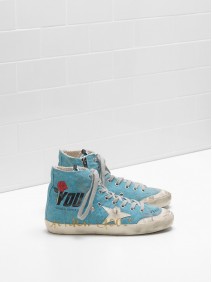
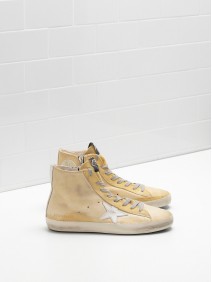
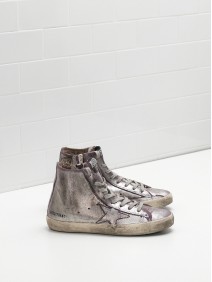
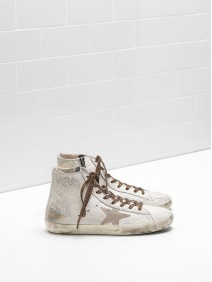
Golden Goose is an Italian house rooted in artisanal craftsmanship, and its sizing reflects that heritage. The brand generally runs true to size for most Australian feet, but the cut leans slightly narrow through the midfoot and the toe box is shaped rather than roomy. If you have a wider foot or a high instep, you may feel a snug fit across the top of the shoe, particularly in leather-heavy silhouettes like the Superstar or Francy.
The signature distressed look is more than cosmetic. Each pair is hand-finished, and the leather is treated to soften quickly with wear. Within a day or two of regular use, the upper usually relaxes enough to mould to your foot. People who initially think the size is too tight often report that the trainers feel custom after a short break-in period, similar to a pair of RM Williams boots shaping around the wearer.
Length-wise, Golden Goose follows European conventions. Most Australian buyers find their usual UK size translates directly, though some prefer to drop half a size if you are planning to wear thicker socks or have a narrow heel. Because the brand caters to a luxury market, half sizes are widely available, which helps dial in the fit more precisely than mass-market lines.
Nike has spent decades refining its sizing charts across running, training and lifestyle ranges, and the consistency is one of its biggest selling points. Most Nike trainers run true to size for Australian shoppers, and the brand’s wide range of widths (sometimes labelled as extra-wide in performance models) makes it easier to find a comfortable match for broader feet.
Where Nike differs from Golden Goose is in the upper construction. Engineered mesh and Flyknit uppers stretch noticeably with wear, while the brand’s leather or synthetic lifestyle models tend to hold their shape. If you normally take a standard Nike size and you are eyeing Golden Goose, expect a slightly firmer wrap across the instep until the leather softens. Runners moving from a Nike Pegasus or Vomero to a Golden Goose Running style should pay particular attention to the toe room, as the Italian cut sits closer to the front of the foot.
Another point worth flagging is the heel. Nike uses a variety of heel counters that lock the foot in place, whereas Golden Goose relies more on the lacing system and the natural shape of the leather. Australians who find the Nike heel grip slightly too firm may actually prefer the softer hold of a broken-in Golden Goose pair.
Adidas sits somewhere between Nike and Golden Goose on the fit spectrum. The German brand’s iconic Stan Smiths, Sambas and Gazelles tend to run a touch narrow at the forefoot, which mirrors the Italian cut of Golden Goose quite closely. Both brands reward buyers with average-width feet and can feel restrictive for anyone with a broader forefoot.
The Ultraboost and other knit-based Adidas trainers, however, stretch generously and accommodate a wider range of foot shapes. If you wear an Ultraboost in your standard size, you may want to consider sizing down half a size in Golden Goose for a similar snug feel, particularly in the Mid Star or Starter silhouettes that use thicker leather panels.
Australians shopping in Adelaide’s Rundle Mall or Brisbane’s Queen Street Mall will recognise that Adidas sizing is well understood locally. Translating that experience to Golden Goose is fairly straightforward, provided you account for the leather break-in factor and the slightly more sculpted Italian last.
Australia’s climate varies wildly, from the humidity of tropical Cairns to the dry chill of a Canberra winter, and sneaker materials react differently in each setting. Suede and napped finishes, common on Golden Goose Haus Halley and Francy models, can stiffen slightly in cooler weather and stretch in warm, humid conditions. Customers in Sydney and Brisbane often find their Golden Goose sneakers feel tighter during a wet summer arvo and looser once the leather has aired out.
Rubber soles and technical fabric uppers are largely unaffected by temperature, which makes running-focused Golden Goose pairs a safer bet for year-round wear in cities with unpredictable weather like Melbourne. Leather-lined pairs, on the other hand, benefit from a leather conditioner every few months to keep them supple, especially for buyers in coastal areas where salt air can dry the material out faster.
Foot shape is another local consideration. Australians tend to have a slightly broader forefoot on average than some European populations, which can influence how snug a narrow-cut sneaker feels. Trying a pair on later in the day, when feet are at their largest, gives a more realistic sense of the fit, particularly for leather pairs that do not stretch as much as knit alternatives.
The biggest risk when ordering sneakers online is getting the length wrong, and Golden Goose offers less margin for error than Nike or Adidas due to its narrower cut. Measuring your foot from heel to longest toe in the evening, then comparing it to the brand’s size chart, gives the most reliable starting point. Most Australian retailers, including online outlets that ship from London, will accept returns, but paying attention upfront saves the wait.
Reading local reviews helps too. Australian sneaker forums and Reddit threads often include feedback from buyers in Melbourne, Perth and Auckland who have already tested the fit across multiple models. Patterns quickly emerge, such as the Francy running half a size small for wide feet, or the Slide fitting generously because of its open construction.
If you are between sizes, the safest move is to size up rather than down. A slightly roomy pair can be adjusted with thicker socks or an insole, while a tight pair cannot be stretched without specialist tools. And remember that the worn-in distressed finish of Golden Goose sneakers hides creasing well, so a snug pair that softens over time will still look the part on day one.
The outlet at goldengooseshoponline.com stocks the full Golden Goose range for men and women at a fraction of boutique pricing, with free express delivery to Australian postcodes. Browsing the catalogue before committing to a size lets you cross-reference materials, sole construction and design notes side by side, which makes choosing between a Superstar, Running or Mid Star much easier than guessing in a store.