-
Your shopping cart is empty!

MENU
Your shopping cart is empty!
 New
-62%
New
-62%
 -63%
-63%
 -59%
-59%
 -63%
-63%
 -61%
-61%
 -61%
-61%
 -60%
-60%
 -62%
-62%
 -62%
-62%
 -60%
-60%
 -63%
-63%
 -59%
-59%
 -59%
-59%
 -64%
-64%
 -59%
-59%
 -64%
-64%
 -64%
-64%
 -61%
-61%
 -64%
-64%
 -62%
-62%
 -61%
-61%
 -62%
-62%
 -64%
-64%
 -62%
-62%
 -62%
-62%
 -64%
-64%
 -62%
-62%
 -62%
-62%
 -62%
-62%
 -61%
-61%
 -61%
-61%
 -62%
-62%
 -59%
-59%
 -61%
-61%
 -62%
-62%
 -64%
-64%
 -61%
-61%
 -62%
-62%
 -62%
-62%
 -61%
-61%
 -59%
-59%
 -64%
-64%
 -62%
-62%
 -61%
-61%
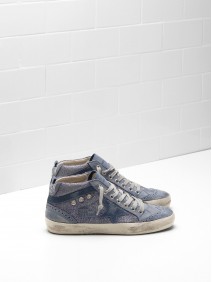
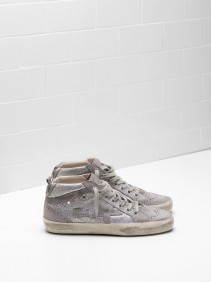
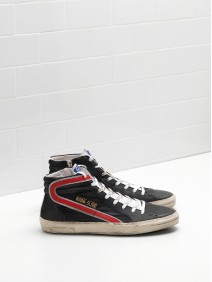
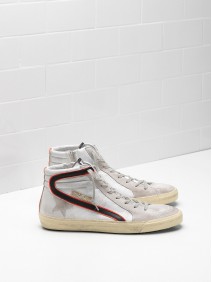
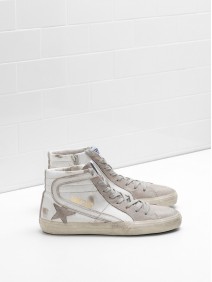
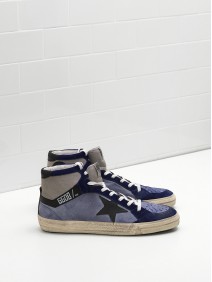
Golden Goose sneakers are recognized for their deliberately worn appearance, handmade finishing, and distinctive star motif. Scuffed leather, faded suede, uneven marks, and yellowed-looking soles are often part of the design rather than evidence that a pair has been used. That intentional aging also makes authentication more complicated, since counterfeiters can imitate a distressed finish.
A reliable check involves several details viewed together. Examine the materials, construction, branding, packaging, seller information, and price instead of relying on one feature. A convincing star or branded box does not prove that the entire pair is genuine.
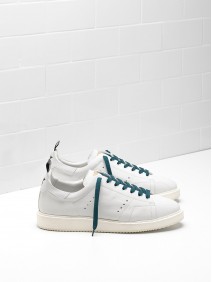
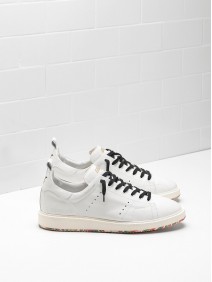
This guide applies across popular styles such as Superstar, Francy, Mid Star, Haus Halley, Starter, Running, Slide, and related Golden Goose collections. Product variations exist between seasons, so compare a pair with official or reputable retail references from the same model and release.
The seller is often the first and most important authenticity signal. Check whether the business provides a verifiable company identity, customer service details, clear returns information, secure payment methods, and consistent product photography. A store that only uses stock images, has no physical or business information, or pressures buyers to pay through an irreversible method deserves caution.
Large reductions can occur through outlet sales, clearance events, older seasons, or discontinued colorways. However, an unusually low price for a supposedly current pair should prompt additional research. Compare the advertised discount with prices from established retailers and consider whether the listing explains its outlet or clearance status.
A low price alone does not establish that sneakers are counterfeit. It does mean the buyer should inspect the product description and policies more carefully. Free fast shipping can be convenient, but it should never replace a transparent return process or proof of purchase.
Golden Goose’s star is a central design feature, yet its exact shape and placement vary by model. Compare the star with reliable images of the same style and colorway. Look for clean attachment, appropriate proportions, and edges that follow the intended silhouette. A star that is dramatically oversized, too flat, poorly aligned, or made from visibly cheap material can indicate a replica.
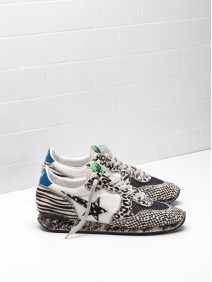
Authentic pairs commonly combine materials such as smooth leather, suede, glitter, metallic leather, and technical fabric. The surfaces should feel appropriate to the listing and show convincing texture. Suede generally has a natural nap, while glitter panels should appear securely finished rather than shedding heavily or looking like thin craft material.
Inspect seams and panel joins closely. Stitching should be regular and firmly anchored, although handmade finishing may create small variations. Loose threads, rushed corners, excess glue, uneven piping, or panels that do not sit flat are stronger warning signs than minor differences in intentional distressing.
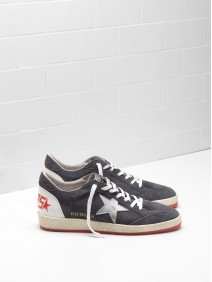
For a reference point, compare the detailing of Smash sneakers with trusted images of the exact release. The silhouette, star treatment, heel construction, and sole profile should correspond to the model description rather than merely resembling a generic low-top sneaker.
Read the size label inside the shoe and compare its typography, spacing, country-of-origin information, and style references with verified examples. Authentic Golden Goose pairs may have different label layouts across production periods, so an unfamiliar format is not automatically fake. The important question is whether the label is consistent with the model and era.
Look for a style or product code on the shoe, box, or accompanying documentation where applicable. The code should lead to the same model, color, and material combination when checked against dependable sources. A copied code can appear on multiple counterfeit listings, so matching numbers are useful evidence but not conclusive proof.
Examine the insole, footbed, outsole, and heel branding. Printing should be legible and positioned consistently, while the rubber sole should have a substantial feel and a coherent tread pattern. Be wary of blurry lettering, incorrect logos, thin rubber, strong chemical odor, or an insole that lifts easily without a plausible construction reason.
QR codes, authenticity cards, and branded tissue paper should be treated as supporting details only. Counterfeiters can reproduce packaging and digital codes. A code that leads to an unusual site, fails repeatedly, or gives information inconsistent with the shoe should be investigated, but a working scan does not guarantee authenticity.
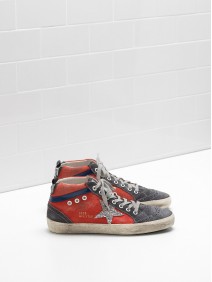
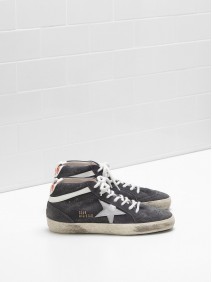
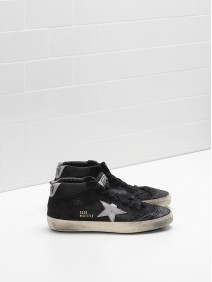
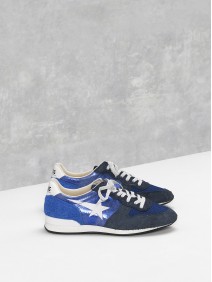
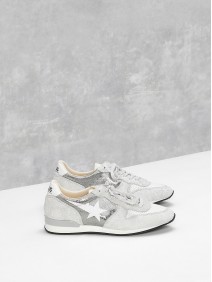
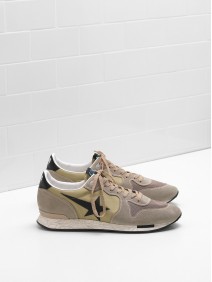
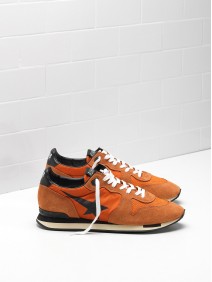
Different Golden Goose styles have different shapes and materials. Superstar sneakers are usually low-top designs with a familiar side star and heel detail, while Francy models have a higher profile and may include a padded collar or strap elements. Mid Star pairs use a taller silhouette, and Running styles typically include technical fabrics and a more performance-inspired sole.
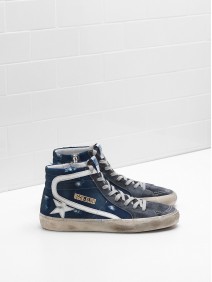
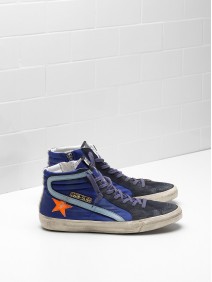
Slides and other open styles should be assessed through their footbed, strap construction, logo placement, and sole molding rather than by applying expectations from a Superstar. Glitter or metallic versions may naturally have more visual variation, while suede can show irregular shading. The product’s material description should match what is physically present.
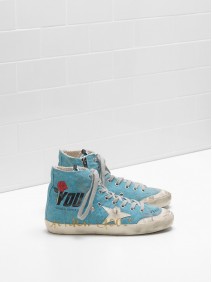
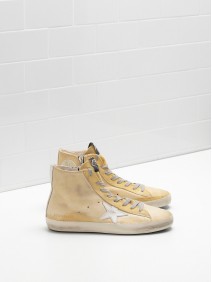
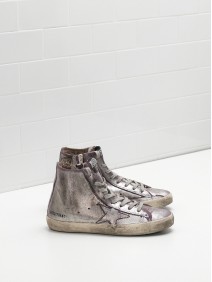
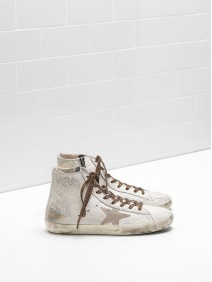
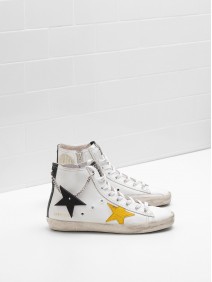
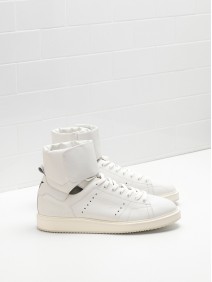
When examining a pair of Francy styles, compare the ankle height, collar padding, strap or fastening details, heel tab, and outsole shape with verified photographs. A counterfeit may copy the general high-top appearance but miss the proportions and layered construction that define the model.
Use several images, not one listing photograph. Front, side, rear, top, and sole views can reveal mismatched panels or a different toe shape. If a listing hides the interior label or outsole, ask for additional photographs before buying.
The following comparison helps organize an inspection. It describes common indicators rather than absolute rules, because Golden Goose releases can differ in finish and production details.
| Feature | More consistent with an authentic pair | Warning signs |
|---|---|---|
| Distressing | Varied, integrated marks that look intentionally finished | Flat printed dirt, identical marks on both shoes, or peeling finish |
| Star and panels | Correct proportions, secure attachment, suitable material | Poor alignment, rough edges, weak glue, or incorrect shape |
| Stitching | Even, durable seams with minor handmade variation | Loose threads, skipped stitches, messy joins, or excess adhesive |
| Materials | Leather, suede, glitter, or fabric with convincing texture | Plastic-like surfaces, thin glitter, harsh odor, or inaccurate material |
| Labels and codes | Clear printing and information consistent with the model | Blurred text, strange spacing, mismatched codes, or missing details |
| Sole and heel | Solid rubber, coherent tread, and correct heel construction | Lightweight feel, crude molding, or an unfamiliar sole profile |
| Packaging | Quality box and inserts that match the purchase information | Generic packaging, inconsistent labels, or copied cards |
| Seller practices | Traceable business, protected payment, and workable returns | Pressure to pay privately, vague policies, or implausible pricing |
Do not reject a pair simply because it looks worn. Golden Goose intentionally uses a vintage-inspired finish, and two shoes from the same pair may not have perfectly identical marks. Focus on whether the distressing is layered into the leather, suede, or sole and whether it looks professionally applied.
Do not accept a pair simply because it includes a box, dust bag, receipt, or authenticity card. Accessories can be transferred between pairs or reproduced. The physical shoe and the transaction history carry greater weight than decorative packaging.
Do not rely solely on online image searches. Color, lighting, camera processing, and seasonal updates can make genuine pairs look different. Compare the product code, construction, and materials with multiple trusted references, and request close-up images when listing photographs are insufficient.
If doubts remain, pause the purchase. An independent luxury footwear authenticator or experienced consignment specialist may be able to assess detailed photographs. For an already purchased pair, document the packaging and condition immediately, avoid wearing them outdoors, and use the seller’s return process within the stated period if the evidence is inconsistent.
Use this short checklist before placing an order:
Authenticating Golden Goose sneakers is a process of matching many small details rather than finding one secret marker. A genuine pair should make sense as a complete product: the construction, materials, branding, packaging, price, and seller information should support the same story.
Take time to compare before buying, keep screenshots of the listing, and save invoices and correspondence. With careful inspection and a protected payment method, shoppers can enjoy the distinctive distressed style while reducing the risk of receiving a counterfeit pair.