-
Your shopping cart is empty!

MENU
Your shopping cart is empty!
 New
-62%
 -63%
 -59%
 -63%
 -61%
 -61%
 -60%
 -62%
 -62%
 -60%
 -63%
 -59%
 -59%
 -64%
 -59%
 -64%
 -64%
 -61%
 -64%
 -62%
 -61%
 -62%
 -64%
 -62%
 -62%
 -64%
 -62%
 -62%
 -62%
 -61%
 -61%
 -62%
 -59%
 -61%
 -62%
 -64%
 -61%
 -62%
 -62%
 -61%
 -59%
 -64%
 -62%
 -61%
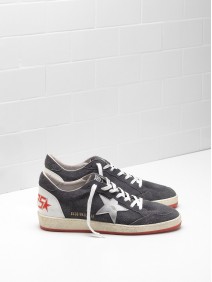
Golden Goose sneakers are known for their distinctive mix of casual silhouettes, premium materials and deliberately worn-in finishes. That distressed appearance can make authentication difficult because scuffed rubber, faded color and uneven marks may be part of the original design rather than evidence of poor quality.
The sole is one of the most useful places to begin when examining a pair. It reveals information about the tread, rubber compound, branding, construction and relationship between the left and right shoes. Still, no single detail proves authenticity. A reliable assessment comes from checking several features together.
Model, production period and colorway also matter. A Superstar sole should not be judged against a Francy or Mid Star sole, and a current release may differ from an older pair. Use the sole as a starting point, then compare it with trustworthy product photographs, packaging and seller information.
Golden Goose uses different sole shapes across its range. Low-profile styles such as Superstar usually have a flatter, everyday sneaker profile, while Francy models have a higher ankle shape and may use a thicker-looking outsole. Running and Starter styles can feature more technical construction, deeper traction and layered materials.
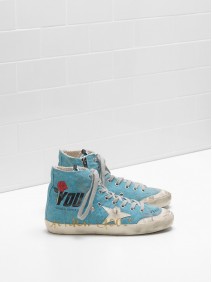
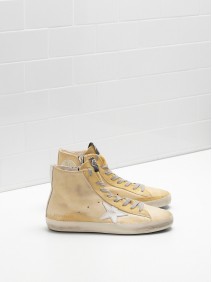
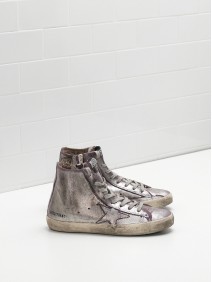
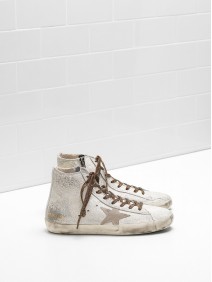
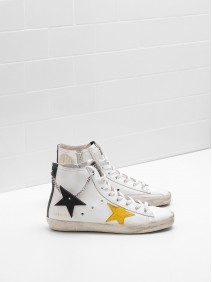
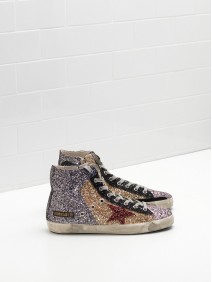
Before inspecting the rubber, identify the exact model. The Francy collection can help shoppers understand how the high-top silhouette, upper proportions and outsole profile work together. A counterfeit may combine details from unrelated designs, such as a low-top upper with a high-top tread pattern.
Pay attention to proportions. The sole should sit naturally beneath the upper without appearing excessively wide, narrow or tall. The toe curve, heel rise and sidewall height should be consistent with the model shown in official or reputable retail images. A mismatch between upper and outsole is often more revealing than a small printing flaw.
Examine the tread from heel to toe rather than looking only at the central logo. Authentic soles generally have a purposeful arrangement of grooves, blocks or channels, with edges that correspond to the shoe’s intended use. The pattern should look balanced and properly molded, even when the surface includes factory distressing.
On a fake pair, the tread may be too shallow, overly sharp or simplified. Repeating shapes can look blurred, crowded or unevenly spaced. Small differences between the two shoes are normal because rubber molding and intentional finishing can vary slightly, but major differences in tread depth or layout should raise concern.
Branding is another useful clue. Look for the position, scale and clarity of Golden Goose lettering or symbols molded into the outsole or sidewall. Genuine marks should be integrated into the rubber, not appear as a thin layer of paint sitting on top. Letterforms that are too thick, badly centered or inconsistent between shoes deserve closer investigation.
Do not reject a pair simply because the logo is worn. Authentic distressed sneakers may have faded or softened markings. The important question is whether the remaining branding has the correct shape and placement for that model.
Run your eyes along the outsole perimeter. A well-made sole should have a clean connection with the upper, even if the sneaker has a deliberately aged finish. Look for controlled distressing rather than random damage. Original scuffs usually support the overall design, while counterfeit pairs may show excessive dark smudges, artificial yellowing or identical marks on both shoes.
Inspect the sidewall for ripples, excess adhesive and gaps. Small traces of glue can occur in genuine footwear, but thick, glossy or irregular adhesive around the heel and toe suggests rushed assembly. The rubber should also feel substantial and flexible rather than brittle, hollow or unusually soft.
The heel is especially valuable because it exposes alignment. Check whether the outsole rises evenly on both sides and whether the upper meets the heel rubber without twisting. A sole that leans, bulges or leaves a visible gap can indicate inaccurate pattern cutting or poor assembly.
Material transitions deserve attention too. If a design combines rubber with a colored insert, textured panel or contrasting strip, the joins should be deliberate. Counterfeits often have slightly different shades, rough seams or poorly fitted inserts that become obvious when viewed from the side.
Inspect both sneakers together on a flat surface. Place the heels in line and compare their length, width and overall stance. Authentic shoes can have minor handmade variation, but the pair should still look like it came from the same production run. One sole should not have a noticeably different tread, gloss level or rubber color without a clear design reason.
Check the insole and outsole relationship. The footbed should sit securely, and the shoe should not rock when pressed at the heel or forefoot. Uneven balance can point to a warped sole or an incorrectly fitted upper. Flex each sneaker gently in the same place and compare the resistance; a dramatic difference is a warning sign.
Photographs can support this process. Ask for clear images of the outsole, heel, toe and sidewalls in natural light. Avoid relying on heavily filtered images or pictures showing only the upper. A reputable listing should make it possible to assess construction details before purchase.
Lacing and styling do not authenticate a sneaker, but they can help reveal whether the seller’s photographs show the actual pair. A guide to different lacing methods is useful for styling, while authentication should remain focused on the shoe’s construction and documented model details.
| Sole feature | Usually reassuring | Possible counterfeit warning |
|---|---|---|
| Tread layout | Balanced pattern suited to the model | Shallow, blurred or incorrectly copied pattern |
| Sidewall branding | Correct placement and molded detail | Thick, misplaced or painted-looking lettering |
| Rubber finish | Firm, consistent and intentionally distressed | Brittle, overly soft, glossy or uneven rubber |
| Edge bonding | Secure join with limited adhesive | Large glue marks, gaps or ripples |
| Pair consistency | Minor natural variation between shoes | Different tread, width or heel alignment |
| Model proportions | Sole matches the upper and silhouette | Upper and outsole appear borrowed from different styles |
This comparison is most effective when used with model-specific references. A genuine-looking tread cannot compensate for an incorrect silhouette, and a slightly worn logo is not automatically suspicious. Look for a pattern of agreement across several characteristics.
If the shoes are advertised as outlet or discounted stock, price alone should not determine your judgment. Outlet pricing, end-of-season reductions and promotional offers can all be legitimate. However, unusually low prices combined with vague product photographs, inconsistent descriptions or pressure to pay quickly create a higher-risk purchase.
Use a consistent inspection routine whenever you examine Golden Goose sneakers online or in person:
Keep records of the listing, order confirmation and product photographs. If the delivered pair differs from the advertised images, those records can help when requesting a return or raising a payment dispute. A seller that refuses detailed outsole photographs or avoids clear questions about provenance deserves caution.
Packaging may include useful information, but boxes, dust bags and spare laces can also be replaced or copied. The sole remains valuable because it is physically integrated into the sneaker and harder to substitute without creating inconsistencies in shape, finish or alignment.
A sole inspection works best as part of a broader review. Compare the outsole with the upper materials, stitching, insole print, size labeling and overall model proportions. Leather, suede, glitter and technical fabric can all appear across different styles, so the details should agree with the specific release rather than with a generic image of Golden Goose footwear.
When buying from a UK-focused online store, check that delivery terms, returns and product information are clearly stated before placing an order. Free fast shipping can be convenient, but it should not replace transparent seller policies or detailed product photographs. Save all purchase documentation until the sneakers have been examined.
Take a few minutes to turn the shoes over before wearing them. Match the tread, study the molded branding and inspect the joins around the heel and toe. That simple habit can help you distinguish authentic design variation from warning signs and make a more informed purchase of Golden Goose sneakers.